


What is “Fear Free” and why is it important?
Fear Free is a movement that was launched in 2016 by Dr. Marty Becker, with the goal of providing exceptional education on emotional wellbeing, enrichment, and reduction of fear, anxiety, and stress in pets. The organization now provides online education and certification to veterinary professionals, like those here at Ankeny Animal and Avian Clinic.
Many pet owners have experienced the heart-wrenching sight of their pet trembling, hiding, or acting out of character, due to the fear and anxiety of a trip to the veterinarian. Some pets may even resort to growling, biting, or scratching, as their fear response takes over. Stressful veterinary visits can cause physiologic and behavior changes which impair healing, contribute to chronic health problems, and make treatment and handling more difficult. When fear, anxiety, and stress around veterinary visits are reduced, the health and wellbeing of patients is improved.
This is why we have become a Fear Free Certified practice, and why we will never use force or aggressive handling techniques when handling your pet, to “just get it done”. Doing so not only can cause the effects listed above, but it can also increase their stress for the next visit, causing more risk to the pet, the owner, and to us. In fact, many aggressive behaviors shown by pets at the vet are the result of years of ignoring their stress levels and using forcible techniques, before we learned there was a better way. While we may never be able to completely eliminate FAS in our patients, we have worked to reduce it as much as possible through gentler handling techniques, environmental modifications, and the use of anti-anxiety medication.
Signs of Fear, Anxiety, and Stress (FAS) in Pets:

Signs of FAS can range from subtle (lip-licking, body tensing, eyes widening and looking to the side) to the very obvious (trying to escape, freezing in place, lunging, growling, or snapping). The Fear Free teaching program shows veterinary professionals like us how to read a pet’s body language in order to clue in to how they are feeling in their environment and watch for changes throughout the entire visit. We can evaluate their level of FAS by using species-specific FAS scales (see photos) and use this to determine the level of intervention and types of tools needed to perform the necessary exams and procedures, keeping the pet as comfortable as possible. This may include offering treats, giving attention, using tools such as a calming cap or basket muzzle, or in severe levels of FAS, using sedation to help us perform the necessary procedures safely and more comfortably for the pet.
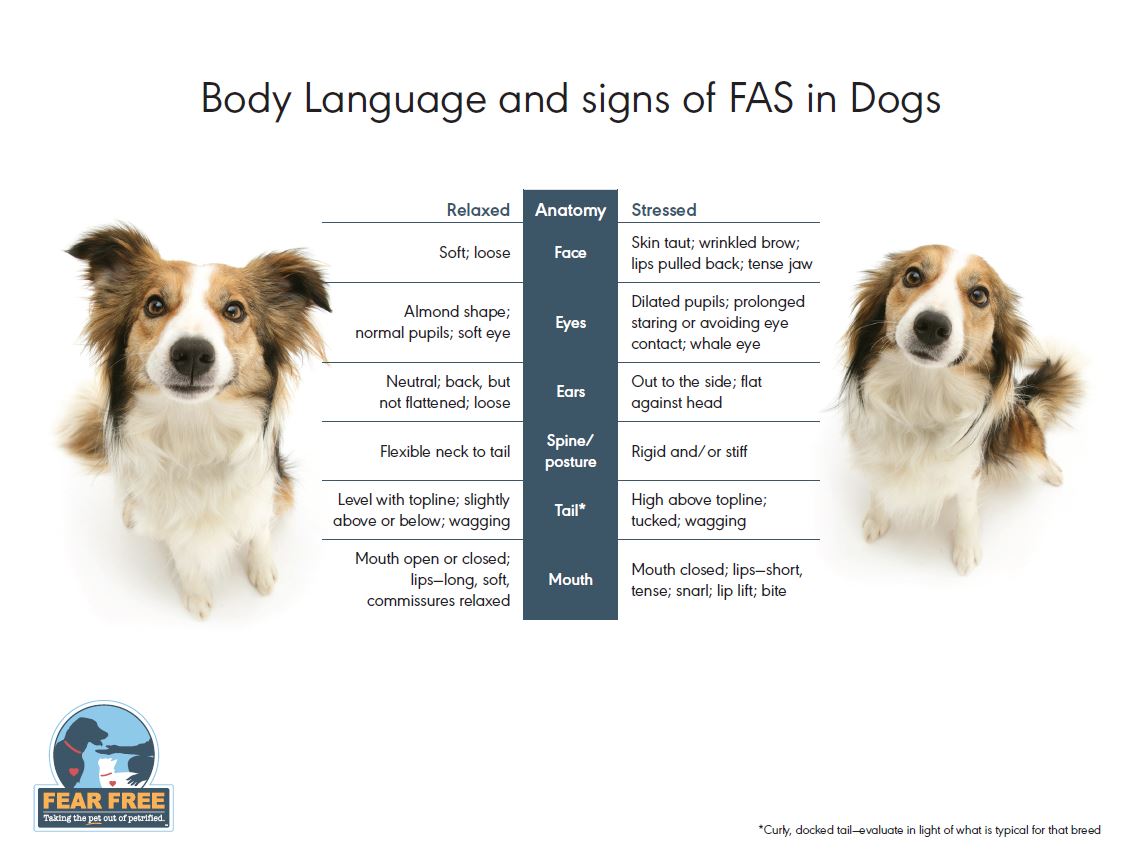
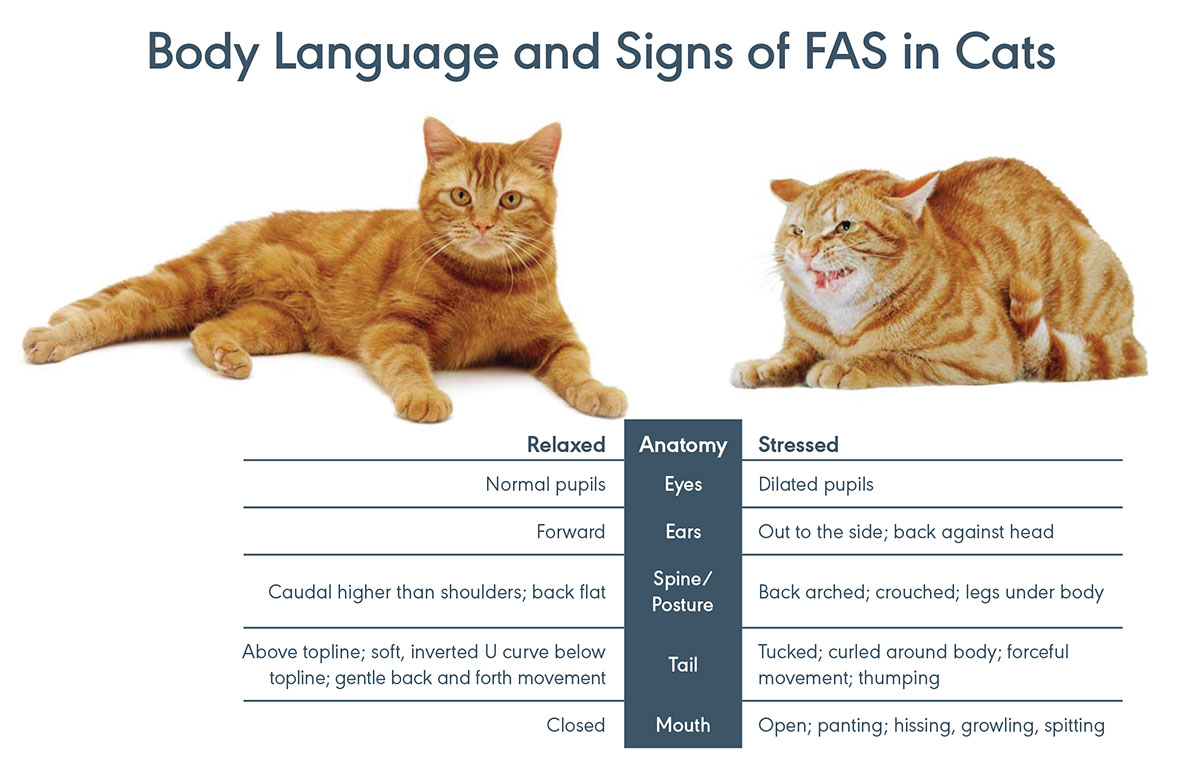
What To Expect When Bringing Your Pet to Our Clinic:
- Pre-medicating your pet before your visit
- Depending on your pet’s FAS levels, we may ask you to give anti-anxiety medications prior to your appointment time. We understand that it may be scary or odd to give your pet these medications, but they can go a long way in increasing your pet’s comfort, as they work best BEFORE your kiddo is exposed to a stressful situation.
- Not giving these medications to a very stressed kiddo may result in either not being able to perform the exam or procedure needed or may result in needing to sedate your pet.
- These medications work best when given at least 2 hours prior to the appointment time.
- Waiting in your car
- To minimize the chance of pets being able to see and interact with each other, we ask that you stay in your car when arriving, and call us to let us know you’ve arrived
- This allows us to prepare the room specifically for your pet, and ensure the waiting area and the path to the room is clear.
- Prioritizing certain procedures over others
- In the event that your kiddo has a higher level of FAS, it may not be possible to get everything done in one visit. Remember, the goal is to set up our pets for success, and not push them past a reasonable comfort level. We may ask that you return on a later date to complete nail trims, heartworm tests, or other non-urgent tasks if your pet’s FAS level becomes too high.
- Our kiddos (just like us) do better if they only have to deal with one or two stressful things at one time, rather than several all at once.
- Checking out in the exam room
- For you and your pet’s convenience, we will check you out in the exam room. Your pet can continue to roam safely in the room while your technician goes over the visit and takes payment, without having to navigate the excitement or stress of people and pets coming in the door, or waiting in line.
- Sedation
- Despite our best efforts, some kiddos never acclimate to veterinary care, and may require sedation in order to be appropriately and safely diagnosed and treated.
- While it can be scary to see your pet sedated, it can save them from unnecessary stress and pain, and allows us to provide more thorough care. We do so only if deemed necessary, and discuss any risks and benefits prior to doing so.
- We want you to feel comfortable in your pet’s care, and welcome your questions and concerns, so it is important to bring them up so we can address them.
How Can I Set my Pet up for Success?

Fear Free care starts at home, and can make a huge difference! The more relaxed your pet is before they arrive, the more comfortable they will be once they get here. This may include environmental enrichment, preparing your vehicle, and creating a positive association with the carrier and the car ride. As mentioned above, this may also mean giving medications or calming supplements prior to leaving. One of the most helpful things you can do is bring your pet in hungry, and/or bringing a high-value treat, so they are more likely to accept treats during their visit, and create a positive association with the vet office.
We are proud to be the only locally owned Fear Free Certified practice in the metro area, and take pride in being able to offer optimal care and well-being for the pets we serve. We also know that our approach does not fit everyone’s needs or expectations. If you want to learn more about how we practice Fear Free medicine, or have specific concerns or questions, please feel free to visit our website at www.ankenyvets.com or contact us at (515) 964-7387 or frontdesk@ankenyanimal.com.
Co-written by Dr. Jess Kelly and Dr. Amanda Gigler


