

Our services
Acupuncture & Laser Therapy
- Dogs
- Cats
Gentle, drug-free options for pain, arthritis, and healing, veterinary acupuncture and therapeutic laser, often alongside conventional care.
- Acupuncture performed by a veterinarian
- A written plan with a reassessment date
- An honest read on whether it is helping
What it is
Gentle options when medication isn't enough
Acupuncture and therapeutic laser are comfort therapies. They are drug-free, they are gentle, most pets tolerate them easily, and for the right patient they can be a genuinely useful part of a pain plan, especially an arthritic senior who cannot take a full dose of anti-inflammatories.
We also want to be straight with you about the evidence, because a lot of what is written about these therapies online is not. For therapeutic laser, a 2023 systematic review of 45 studies found real reported benefits but also wildly inconsistent treatment settings and studies with moderate to high risk of bias, meaning there is no agreed protocol and no settled answer on how well it works. For acupuncture, a well-designed blinded trial in dogs with osteoarthritis found that owners reported improvement while objective gait measurements did not change. Both are promising. Neither is proven the way a good anti-inflammatory is proven.
So here is how we use them: as an addition to a pain plan, never as a replacement for diagnosis or for treatment that works. If your pet is a candidate we will say so, if the evidence is thin for their particular problem we will say that too, and if it is not helping after a fair trial we will tell you rather than keep booking sessions.
- 45
- studies reviewed in a 2023 systematic review of veterinary light therapy
- 1974
- the year IVAS began setting training standards for veterinary acupuncture
- 32
- dogs in a blinded acupuncture trial that found owner-reported gains but no objective change
Why it matters
Honest about what these can and cannot do
Pain in a chronically sore pet is worth attacking from several directions at once, and current pain-management guidelines say exactly that: combine approaches so no single drug has to carry the whole load. Acupuncture and laser fit into that picture as low-risk additions with very little downtime, which matters most for pets whose kidneys or livers limit what medication they can take. What they are not is a substitute for finding out what is actually wrong, or for the things with the strongest evidence behind them: weight control, appropriate anti-inflammatory or anti-nerve-growth-factor medication, joint supplements with real data, and controlled exercise.
Inside the visit
What's included
- A pain and mobility assessment before any therapy is recommended
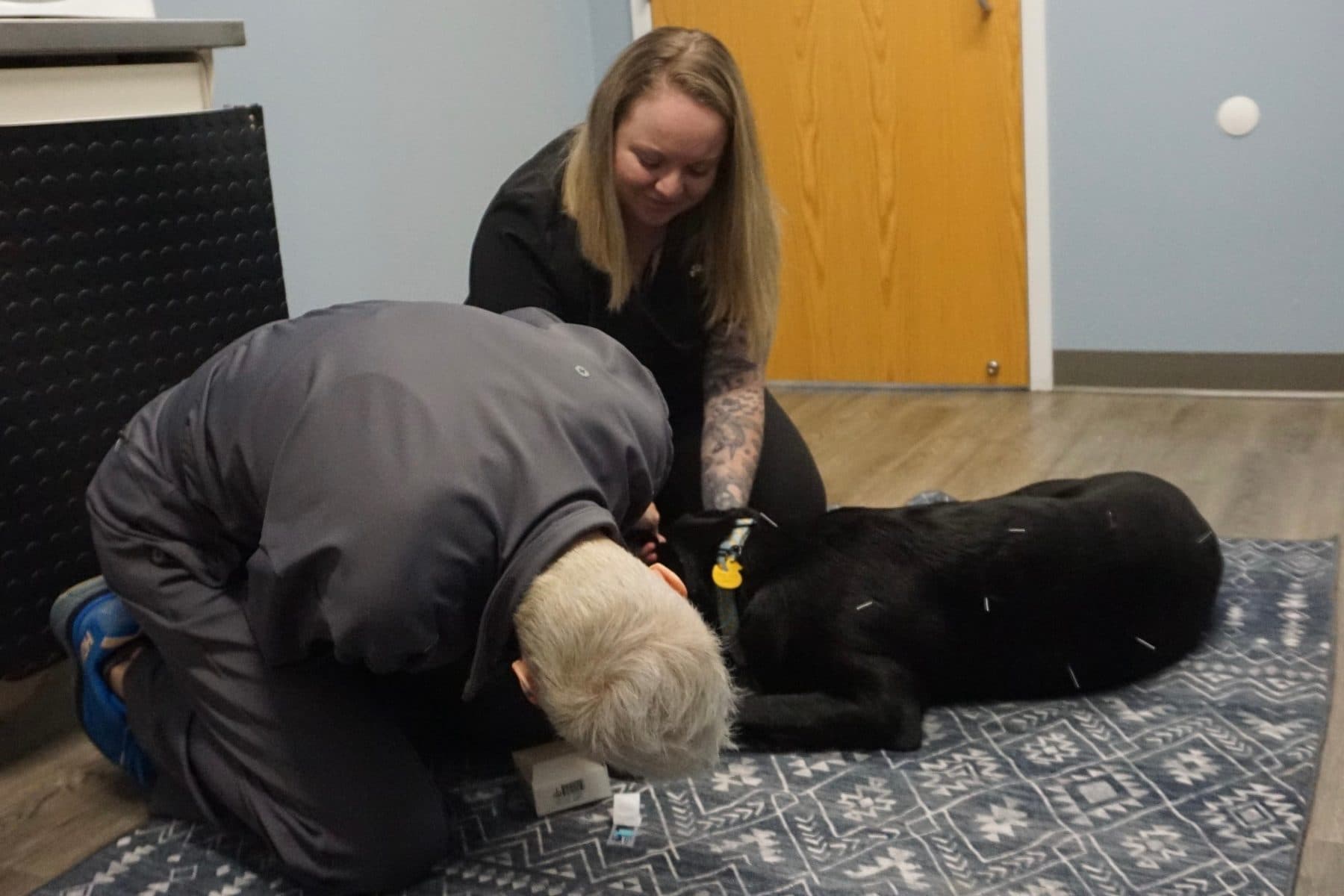
- Veterinary acupuncture performed by a veterinarian
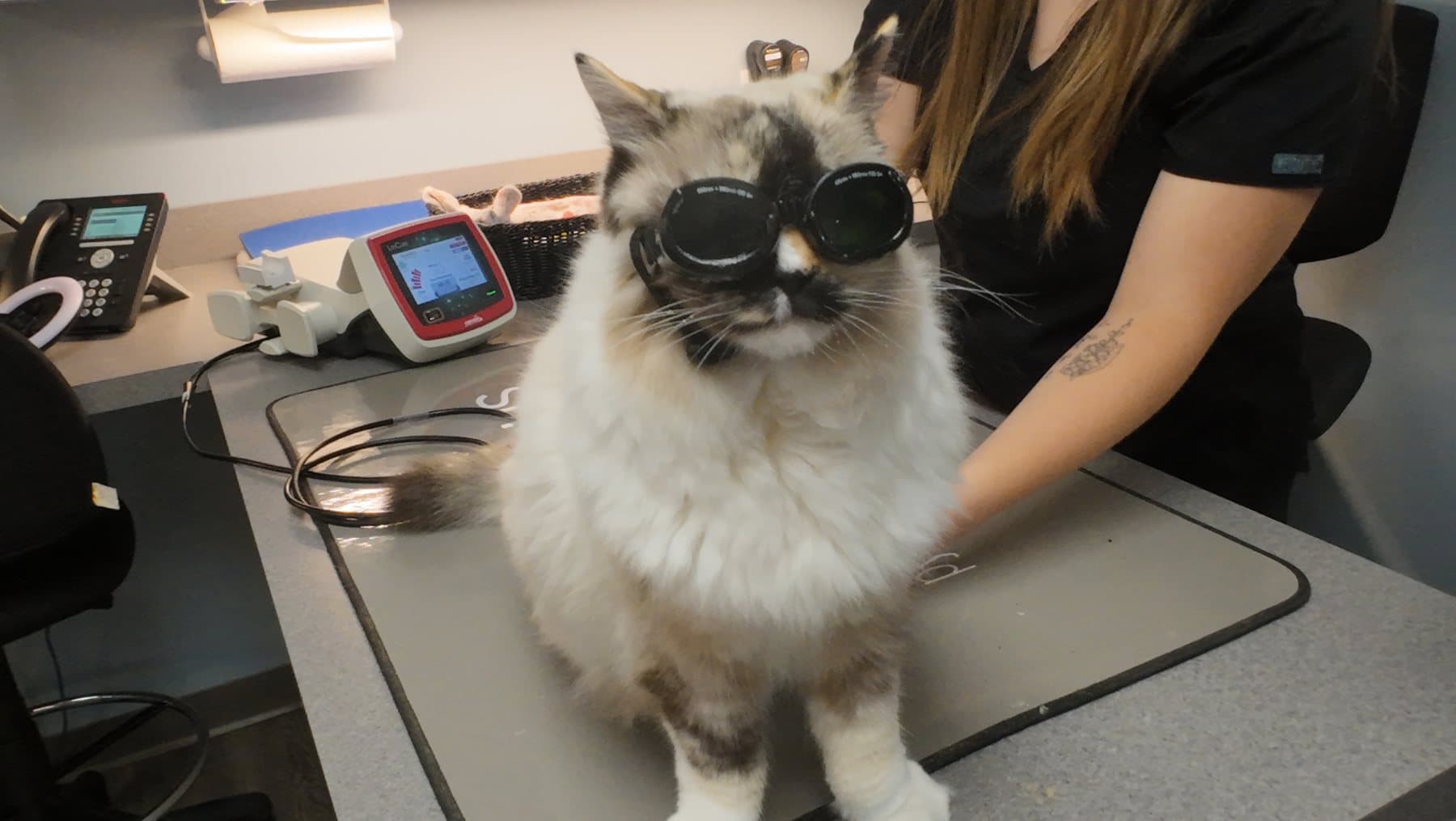
- Therapeutic laser (photobiomodulation) sessions with eye protection for everyone in the room
- Arthritis and chronic pain support for dogs and cats
- Post-surgical and wound healing support
- Senior mobility and quality-of-life plans
- Coordination with medication, weight management and controlled exercise, which carry the strongest evidence
- A written plan with a set reassessment date instead of open-ended sessions
- An honest read on whether it is helping, and a recommendation to stop if it is not
Pets this can help
These therapies are additions to a plan, not a plan on their own. They tend to be most worth trying for:
- Arthritic dogs and cats who are stiff, slow to rise, or avoiding stairs and jumping
- Pets whose kidney or liver values limit how much anti-inflammatory medication they can take
- Pets who have had a bad reaction to a pain medication
- Dogs recovering from orthopedic or soft-tissue surgery, alongside a rehab plan
- Slow-healing wounds and post-surgical incisions
- Chronic pain that is not fully controlled on medication alone
- Older pets whose main problem is mobility and quality of life
- Cats, who have very few licensed long-term pain options and often hide arthritis completely
Your visit
What to expect
Calm, hands-on, and honest about whether it is working. Here is how a course of treatment runs.
- 1
A real pain workup first
Before any therapy, we want to know what we are treating. That means an exam, a pain and mobility assessment, and often X-rays or bloodwork. Treating pain without a diagnosis can mask something that needed finding, so this step is not optional.
- 2
A straight conversation about fit
We tell you what the evidence does and does not support for your pet's specific problem, what else should be in the plan, and what a fair trial looks like. Some conditions have better support than others, and you should hear that before you spend money on a course of sessions.
- 3
A written plan with a review date
Chronic conditions usually start with a run of sessions close together, then taper to maintenance if they are helping. We set the number of sessions and the date we reassess up front, so the plan has an end point rather than rolling on indefinitely.
- 4
A laser session
Everyone in the room wears protective goggles, including your pet, because the wavelengths used can damage eyes. The handpiece moves slowly over the treatment area for several minutes. It feels like gentle warmth, there is no shaving and no sedation, and most pets settle. A few appointments and they are usually asleep for it.
- 5
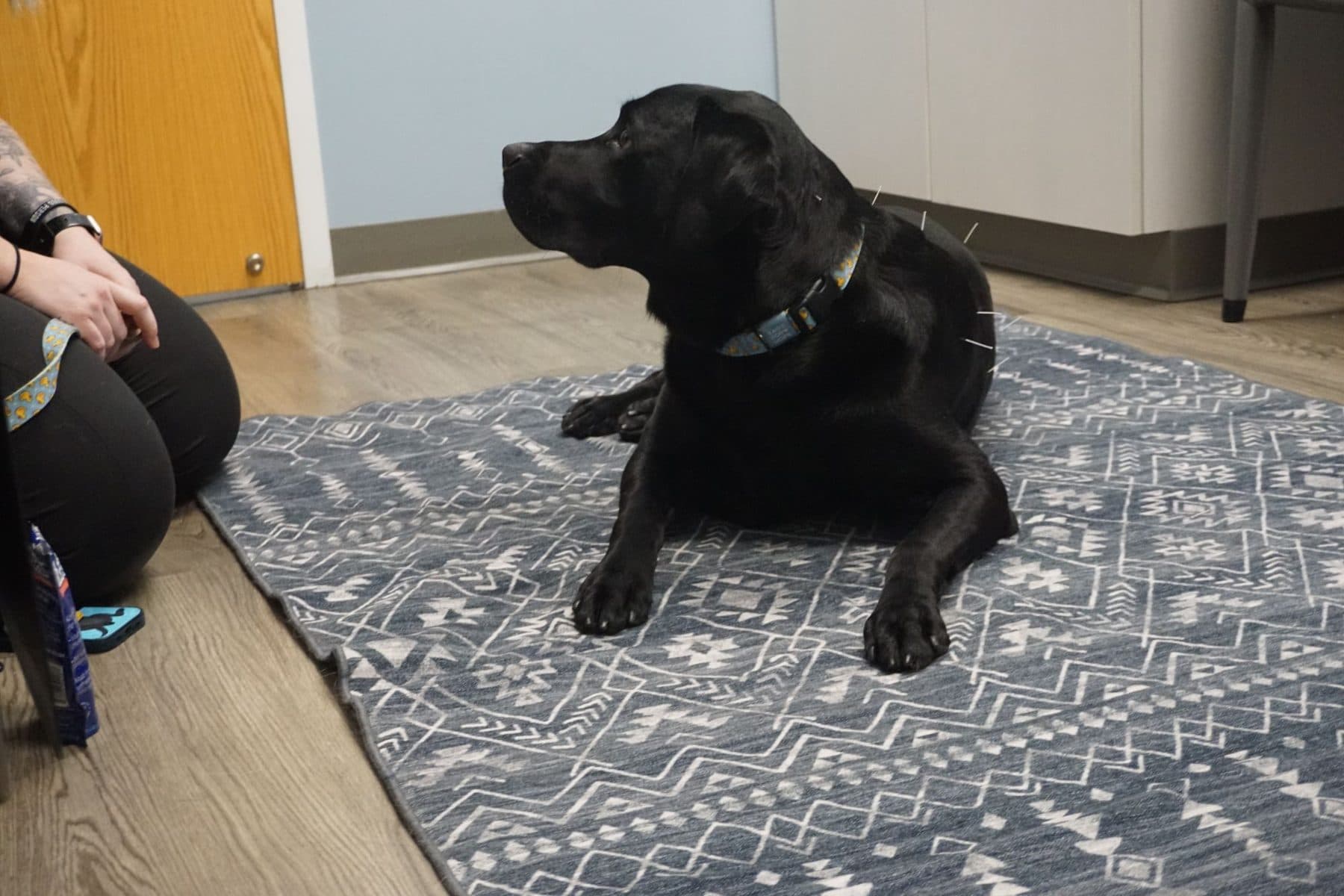
An acupuncture session
Very fine needles are placed at specific points and left in for roughly 10 to 20 minutes. Most pets barely react to the placement and many relax deeply. Some are tired or noticeably looser that evening. Sessions run longer than laser because the settling-in time is part of the treatment.
- 6
Reassessment with something measurable
At the review point we compare against where we started: a validated owner questionnaire, how they handle stairs and the car, willingness to walk, how long they take to rise. If we cannot find a real change, we say so and change the plan instead of selling you more sessions.
Good to know
Common questions
Does acupuncture hurt?+
Very little. The needles are much finer than the ones used to draw blood, and most pets react more to being held still than to the needle going in. A good number relax noticeably and some fall asleep. If a pet genuinely objects, we stop, because a stressed animal is not getting the benefit anyway.
What is therapeutic laser, and can I feel it?+
It is light at specific wavelengths aimed at tissue, also called photobiomodulation. It does not cut or burn, and what a pet feels is mild warmth. The one real safety point is eyes: everyone in the room wears goggles, pets included, because these wavelengths can cause eye injury even though the beam feels harmless on skin.
How much does a session cost?+
Laser sessions are typically priced per session, often with a package rate when a condition needs a course of them. Acupuncture sessions cost more than laser because they take longer and are done by a veterinarian. Call us for current pricing, and ask for the cost of the whole planned course rather than just the first visit, so you can judge whether it is worth starting.
How long is a session, and how many will we need?+
A laser treatment usually takes a few minutes to around fifteen, depending on the area. Acupuncture is longer, often 20 to 40 minutes including settling time. For a chronic problem, expect a run of sessions close together at first, then a review. If there is no meaningful change after a fair trial, the right answer is to stop, not to keep going.
Is it safe? Are there pets who should not have it?+
Both are low risk, but not risk-free, and there are real cautions. Laser is generally avoided directly over known or suspected tumors, over the pregnant uterus, over the thyroid, on recently infected joints, and on pets taking photosensitizing medications, and eye protection is mandatory. Acupuncture should be used carefully in pets with bleeding disorders or on blood thinners, and over infected or damaged skin. Tell us every medication and supplement your pet is on so we can check.
Can my pet stay on their pain medication?+
Yes, and usually they should. These are additions to a pain plan, not replacements for it. If your pet responds well, your veterinarian may be able to lower a medication dose over time, but that is a decision made with the vet after watching the response, not something to do on your own at home.
Is this a replacement for surgery or for a real diagnosis?+
No. If a pet has a torn cruciate ligament, a fracture, an infection or a mass, these therapies do not fix any of it, and using them instead of a diagnosis wastes time your pet does not have. We always want to know what is causing the pain first. Once we do, comfort therapies can take their place in the plan.
Will my pet need to be sedated or shaved?+
No to both, for the great majority of patients. Laser needs no clipping and no sedation, and acupuncture is done on an awake, unrestrained-as-possible pet. The whole point of these sessions is that they are easy, so if a pet finds one genuinely distressing, that in itself is a reason to choose a different approach.
Keep exploring