

Our services
Surgery
- Dogs
- Cats
Routine and advanced surgery, spays, neuters, mass removals, and soft-tissue procedures, with safe, closely monitored anesthesia.
- A dedicated surgical suite
- Someone watching the monitors
- Pain control planned before we start
What it is
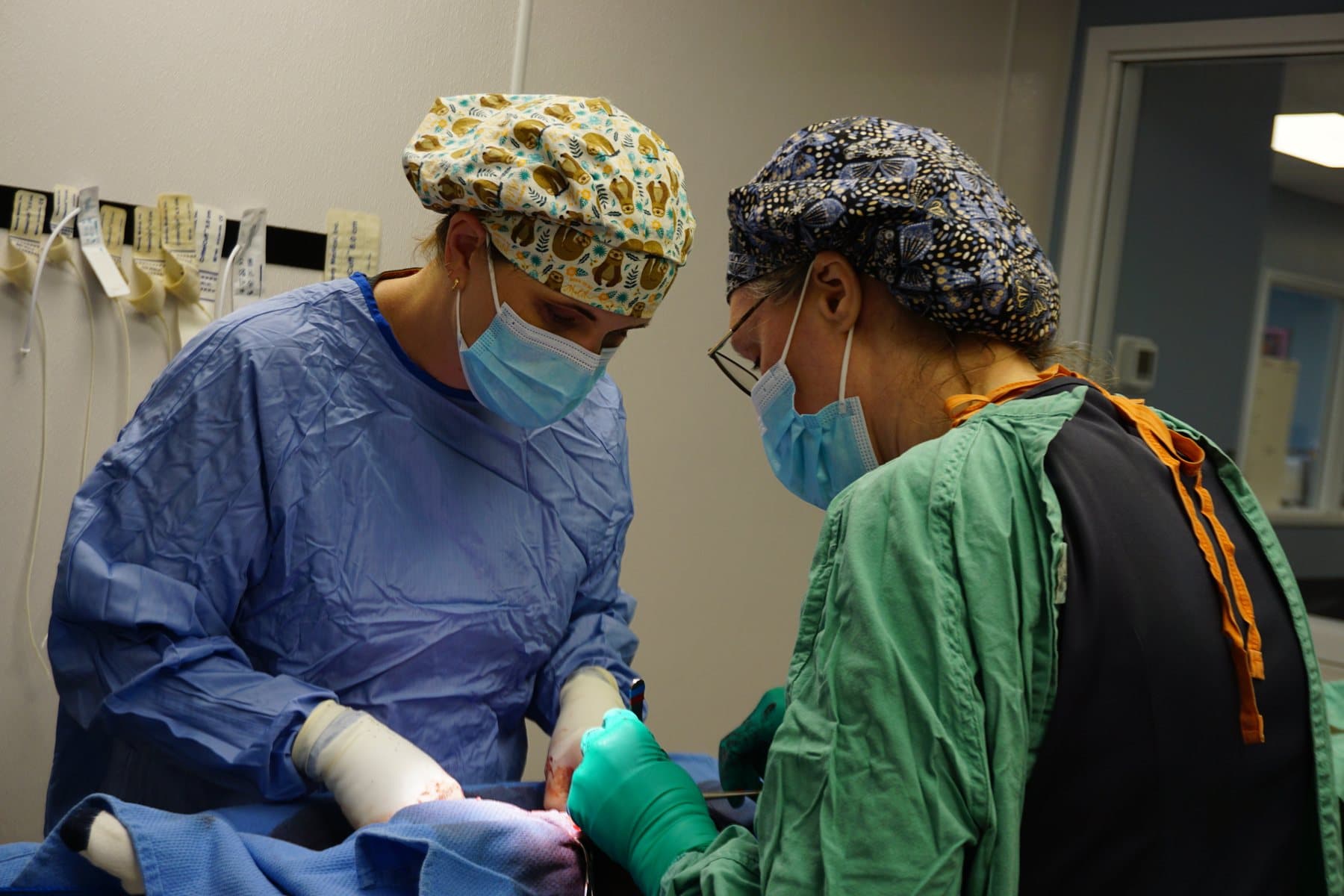
Surgery with someone watching every minute
Surgery is the part of veterinary care that worries owners most, and the worry is almost always the same one: the anesthesia. The honest answer is that for a healthy pet, modern veterinary anesthesia is very safe. In the largest study of its kind, the risk of an anesthetic-related death was 0.05% in healthy dogs and 0.11% in healthy cats, roughly 1 in 2,000 and 1 in 900.
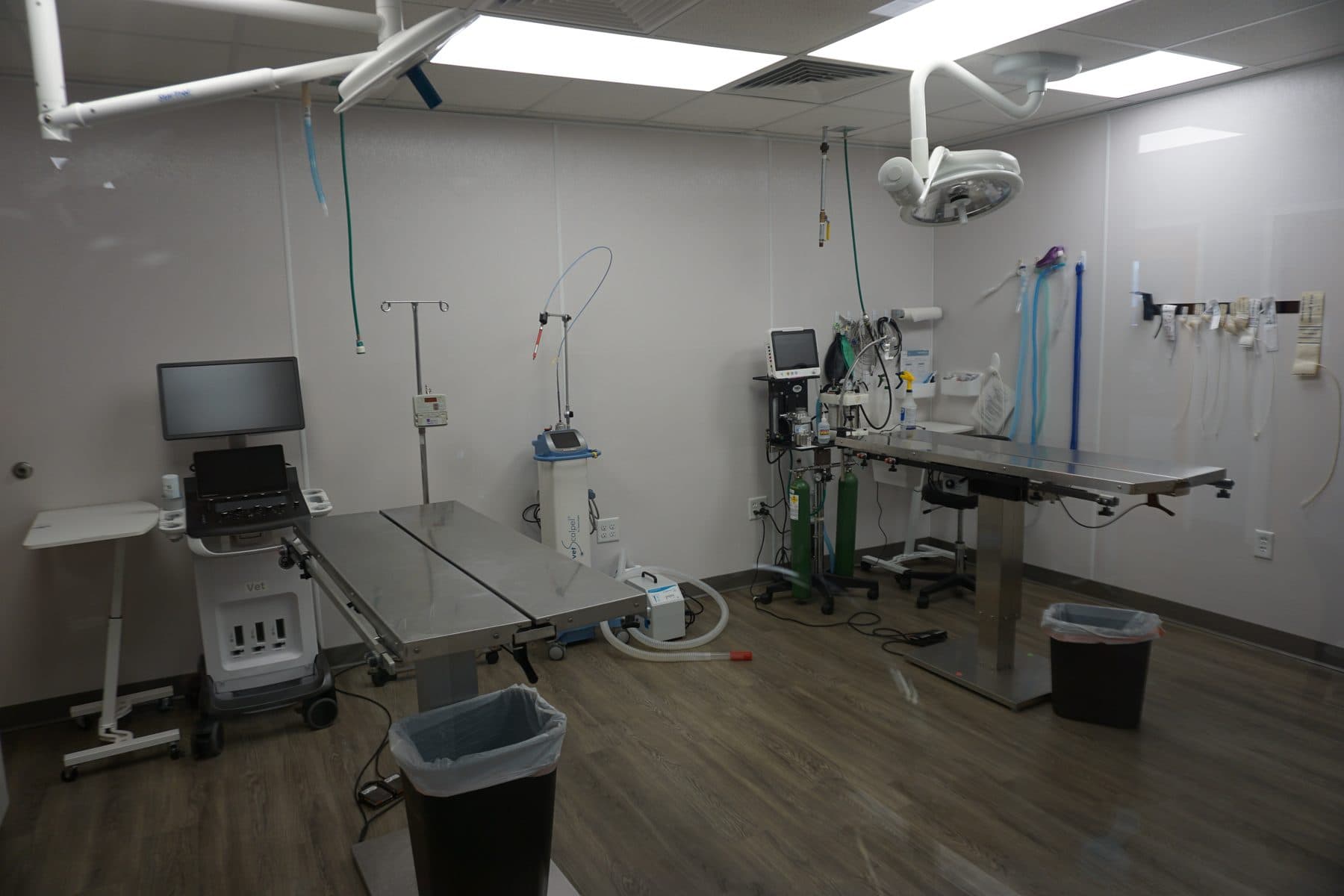
What makes it safe is not luck. It is the physical exam and bloodwork beforehand, a drug protocol chosen for that individual animal instead of a one-size-fits-all dose, someone whose only job during the procedure is watching the monitors, and someone staying with your pet while they wake up. Nearly half of anesthetic-related deaths in dogs happen after the procedure has ended, most of them in the first three hours, which is why recovery gets treated as part of the surgery rather than the end of it.
The other half of a good surgery is pain control. Current guidelines are built around treating pain before it starts and using several methods together, rather than waiting to see whether a pet looks sore. Pets are poor at showing pain and very good at hiding it, so the safe assumption is that if a procedure would hurt us, it hurts them, and the plan is built on that assumption.
- 0.05%
- risk of anesthetic-related death in healthy dogs, about 1 in 2,000
- 0.11%
- the same risk in healthy cats, about 1 in 900
- 9 to 15 months
- when AAHA suggests neutering most large-breed dogs, after growth finishes
Why it matters
What actually makes surgery safe
Safety in surgery is not one thing, it is a stack of small, boring, repeatable steps. A physical exam and pre-anesthetic bloodwork to confirm the heart, liver and kidneys can handle the drugs. A protocol chosen for that pet's age, breed, weight and health rather than a standard dose. An airway that is protected, a body temperature that does not drop, and continuous monitoring of circulation, oxygenation, ventilation and temperature. Pain treated before the first incision instead of after. And then the part owners rarely think about: a watched recovery, because 47% of anesthetic-related deaths in dogs and around 60% in cats happen after the procedure has finished, most within three hours. Any clinic can do a spay. The difference is in what happens around it.
Inside the visit
What's included
- Spays and neuters, timed to your pet's breed and size
- Mass, lump and tumor removals, with biopsy when it is worth knowing
- Soft-tissue and abdominal surgery
- Wound and laceration repair
- Surgical laser for select procedures, which can mean less bleeding and less swelling
- Pre-anesthetic physical exam and bloodwork, with our lab on site
- An anesthetic protocol chosen for your individual pet, not a standard dose
- Continuous anesthetic monitoring and active warming throughout
- Pain control planned before the procedure starts and continued at home
Reasons we recommend surgery
Some are planned months ahead, some come up the same week. These are the most common.
- Spay or neuter, timed to your pet's size and breed rather than a fixed age
- A lump or mass that is new, growing, or changing
- Wounds, bite injuries, and lacerations that will not heal well on their own
- Bladder stones, or a urinary blockage
- Something swallowed that will not pass
- An abdominal problem found on exam, bloodwork or imaging
- A painful or infected tooth that needs surgical extraction
- A skin mass, cyst or growth that keeps getting traumatized
Your visit
What to expect
Surgery day is planned, and none of it should be a surprise to you. Here is how it normally runs.
- 1
Consultation and written estimate
We examine your pet, explain what the procedure involves and what the alternatives are, and put a written estimate in your hands before anything is booked. If there is a realistic chance the plan changes once we are in there, we tell you the range up front.
- 2
Pre-anesthetic exam and bloodwork
Bloodwork and a physical exam check organ function and flag anything that would change the anesthetic plan. Age on its own is not a reason to avoid anesthesia. What matters is how the heart, liver and kidneys are working today.
- 3
An anesthetic plan built for your pet
Premedication to take the edge off and start pain control early, then an anesthetic protocol chosen for your pet's species, breed, age and health. A breathing tube protects the airway, and intravenous access is there if anything needs to be given quickly.
- 4
Surgery, with someone watching the whole time
While the surgeon works, a trained team member stays on anesthesia, tracking heart rate and rhythm, blood pressure, oxygen levels, carbon dioxide, breathing and temperature, and keeping your pet warm. Warming matters more than people expect, because a cold patient wakes up slower and hurts more.
- 5
Recovery, watched not parked
Your pet wakes up somewhere warm and quiet with a person nearby, because the recovery window is where most anesthetic problems show up. Pain medication is already on board before they wake, not after they tell us it hurts.
- 6
Home with a plan you can actually follow
You leave with plain-language aftercare, the medications your pet needs, what a normal incision looks like on days two, five and ten, and the specific things that mean call us. Most routine procedures mean roughly 10 to 14 days of limited activity and keeping the site clean and dry.
Good to know
Common questions
Is anesthesia safe for my pet?+
For healthy pets, yes. The best data we have puts the risk of an anesthetic-related death at about 0.05% in healthy dogs and 0.11% in healthy cats. That risk rises in pets who are already sick, which is exactly why we run an exam and bloodwork first, build the protocol around your individual pet, monitor continuously, and watch the recovery. If we find something that changes the picture, you will hear about it before we schedule.
My pet is old. Are they too old for surgery?+
Age is not a disease. What matters is organ function and overall health, which is what pre-anesthetic bloodwork and the exam are for. Plenty of seniors come through anesthesia comfortably. The thing to weigh against it is the cost of not doing the procedure, because a painful tooth, an infected uterus or a growing mass is a daily problem your pet already lives with.
Will my pet be in pain afterward?+
We plan for pain rather than react to it. Current pain-management guidelines call for treating pain before it starts and combining several approaches, which is more effective than any single drug and keeps doses lower. Your pet gets pain control before, during and after the procedure, and goes home with medication and a schedule. Pets hide discomfort, so stick to the schedule rather than waiting to see if they seem sore.
How much does surgery cost?+
It depends on the procedure, your pet's size, how long they are under anesthesia, and what has to happen afterward. A routine spay or neuter sits at one end, a complex mass removal with biopsy and follow-up at the other. You get a written estimate before we schedule, and if something we find during the procedure would change the total, we call you rather than deciding for you.
How long does it take, and will my pet stay overnight?+
Most routine surgeries are a morning drop-off and a same-day pickup. The procedure itself is often under an hour, but your pet needs time to settle before and recover after, which is why the day is longer than the surgery. We will tell you the plan for your specific procedure when you book.
When should I spay or neuter my pet?+
It depends on size and breed, and the advice has genuinely changed. For smaller dogs, around five to six months is still reasonable. For large-breed dogs, AAHA points to waiting until growth is done, usually 9 to 15 months, because dogs neutered before their growth plates close have shown higher rates of cruciate ligament injury, hip dysplasia and certain cancers. Cats are usually done earlier. Ask us for a recommendation for your specific pet rather than going by a number you read online.
Does my pet need to fast before surgery?+
Usually yes, and we will give you exact instructions when you book, including whether to withhold water and what to do about morning medications. Fasting rules have gotten shorter and more specific than they used to be, so follow the instructions we give you rather than the ones from an older pet's surgery.
Do you declaw cats?+
No. We stopped performing declaw procedures several years ago. Declawing amputates the last bone of each toe, and feline welfare organizations no longer recommend it. We are glad to help with the alternatives instead: regular nail trims, scratching posts placed where your cat is already scratching, and soft nail caps.
What happens if you find something unexpected during surgery?+
We call you. Anything that would meaningfully change the plan, the recovery or the cost is a conversation, not a decision we make on your behalf. Keep your phone nearby on surgery day, and if we cannot reach you, we do what is safest for your pet and explain it fully at pickup.
Keep exploring