

Our services
Diagnostics & Ultrasound
- Dogs
- Cats
- Birds
- Exotics
On-site lab work, digital X-ray, ultrasound, and echocardiography for fast, accurate answers when your pet isn't feeling right.
- In-house blood panels
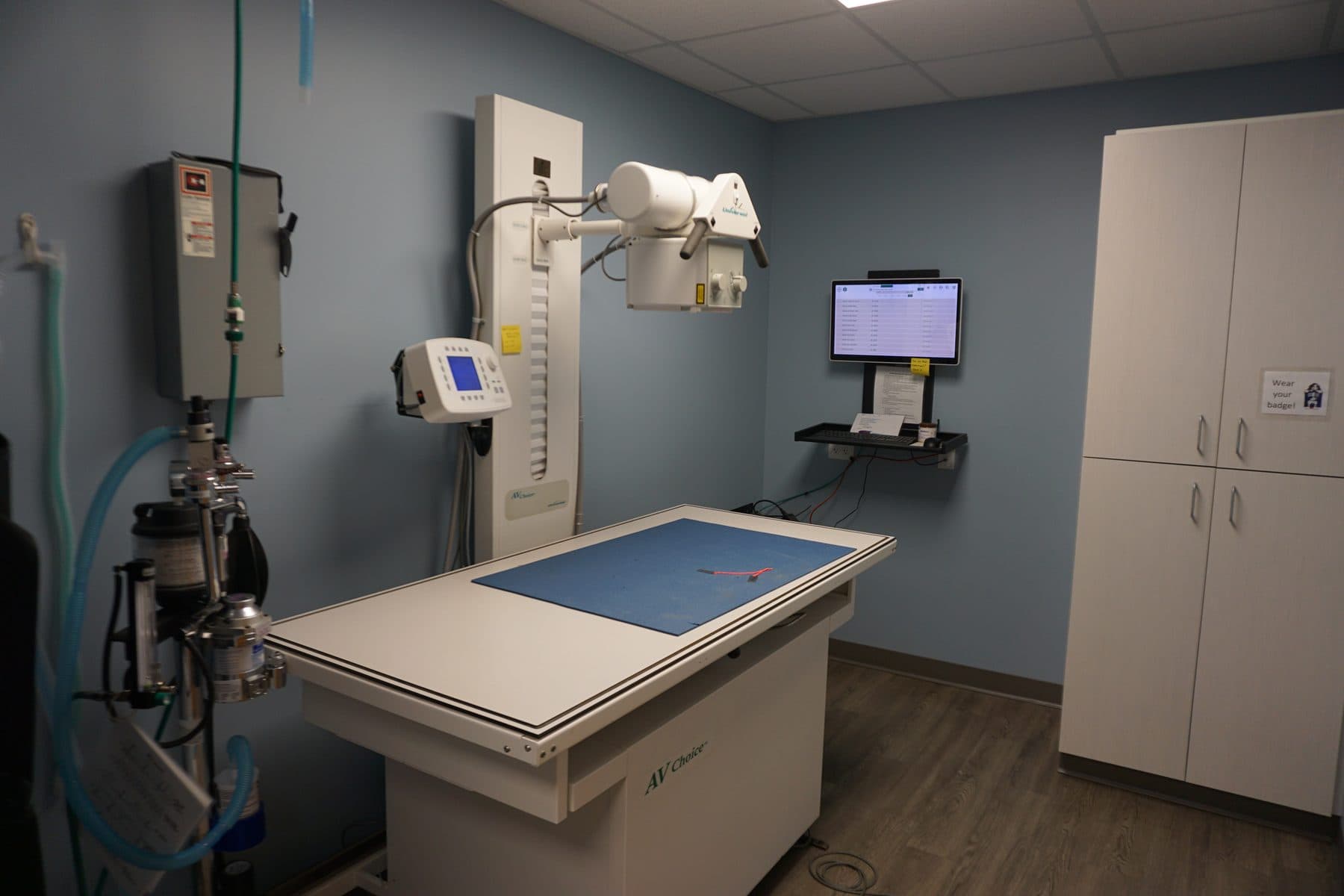
- Digital X-ray and ultrasound
- Species appropriate testing for exotics
What it is
Answers the same day, not next week
A physical exam tells us a great deal, and then it stops. Hands and a stethoscope can find a murmur, a mass or a painful hip. They cannot measure kidney values, count red blood cells, or see the sock your dog swallowed. Diagnostics are how we get past the edge of what an exam can reach.
Timing is the other half of it. Most of what we look for is silent for a long stretch first. A cat can lose close to 75% of their kidney function before creatinine moves on a routine blood panel, and by then the damage does not come back. The point of testing is to move the diagnosis earlier, while there is still something useful to do.
Because bloodwork and X-rays can happen here in the building rather than being shipped out, a lot of that conversation happens while you are still in the room. Faster answers are not just less stressful. For a sick pet, they are often the difference between starting treatment today and starting it Thursday.
- 40%
- of cats over 10 have chronic kidney disease, and 80% over 15
- 22 of 100
- apparently healthy older dogs had a heart murmur found on a screening exam
- 7 months
- heartworms must be present before any test can detect them
Inside the visit
What's included
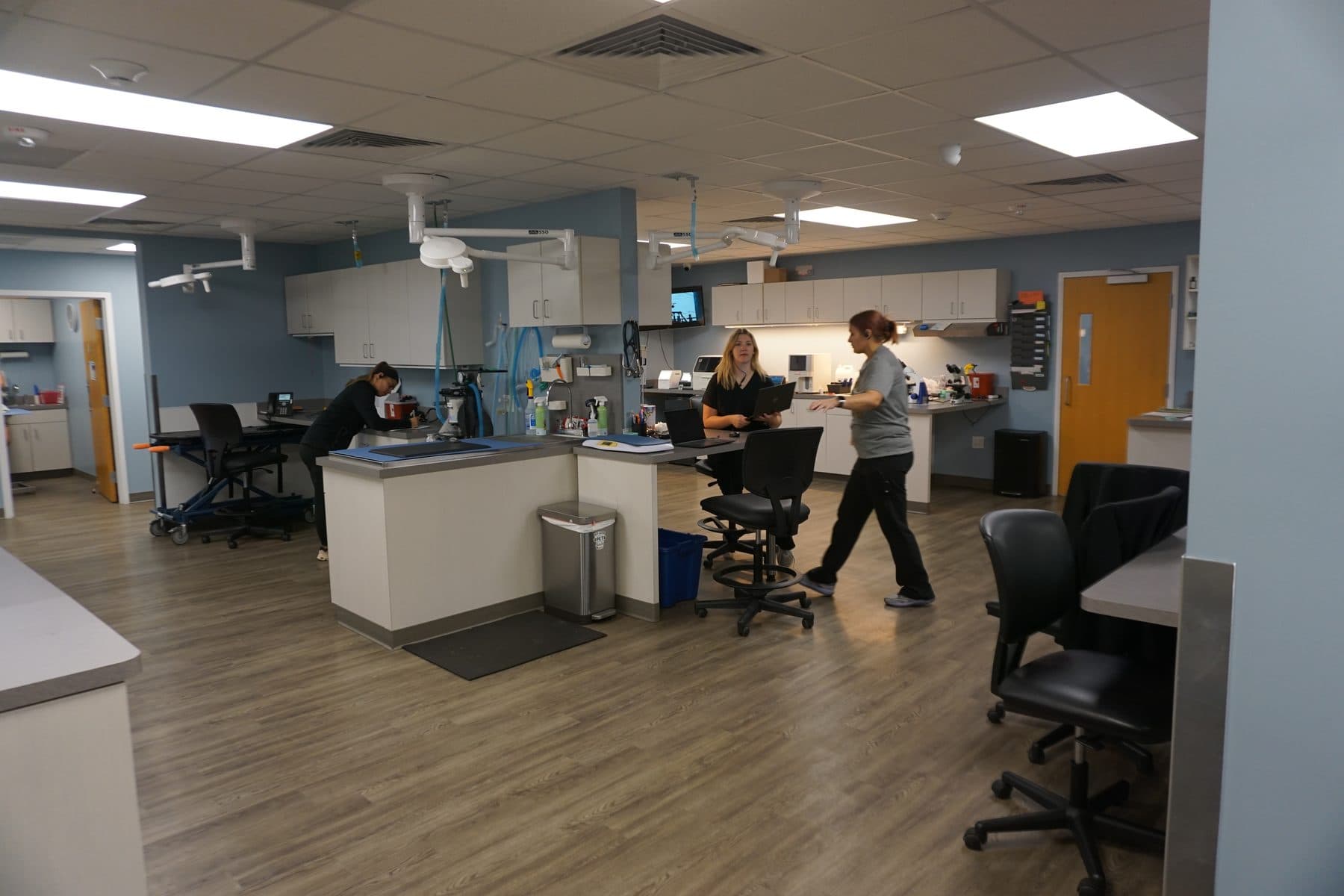
- In house blood panels, including complete blood count and chemistry
- Urinalysis, including concentration and sediment examination
- Fecal testing for intestinal parasites
- Heartworm and tick borne disease testing
- Digital X-ray for chest, abdomen, bones and joints
- Ultrasound and echocardiograms, for the soft tissue detail an X-ray cannot give
- Cytology, looking at cells from a lump, ear or skin sample under the microscope
- Pre-anesthetic bloodwork before surgery or a dental procedure
- Species appropriate testing for birds and small mammals
When diagnostics are worth running
Not every visit needs testing. These are the situations where it usually earns its place:
- Vomiting, diarrhea, or a real change in appetite
- Drinking or urinating noticeably more, one of the earliest signs of kidney disease and diabetes
- Weight loss with a normal or increased appetite, which points at the thyroid or the gut
- Lethargy, weakness, or just clearly not themselves with nothing to point at
- Limping, stiffness, or pain that has not resolved on its own
- A new lump, so we can tell you what it is rather than guess
- Before anesthesia, to check organ function and tailor the protocol
- As a senior baseline, so next year's numbers have something to be compared against
- Coughing, labored breathing, or exercise intolerance
Your visit
What to expect
Most diagnostics are quick, and most pets stay awake for them. Here is how a workup usually goes.
- 1
The exam comes first
Tests follow findings, not the other way around. What we heard, felt and saw, plus what you have noticed at home, decides which tests will actually answer the question in front of us.
- 2
What each test would tell us, and what it costs
Before anything is run we will tell you what a given test can and cannot answer, and what it costs. You can say yes to some and not others, and we will tell you honestly which ones matter most.
- 3
Collecting the sample
A blood draw takes seconds and most pets barely register it. Urine, stool and cells from a lump are collected with the same Fear Free handling as the exam. We take a break if your pet needs one.
- 4
Imaging
X-rays take a fraction of a second each, with gentle positioning and usually no sedation. Some pets do need light sedation to hold a position comfortably, especially if the area is sore, and we will discuss it with you first.
- 5
Results
Bloodwork and imaging run in house often come back during the same visit. Some specialized tests go to an outside lab and take a few days, and cultures take longer still. We will tell you which kind you are waiting on.
- 6
What it means and what happens next
You get the findings in plain language, a copy of the numbers or images, and a specific next step: treatment, a recheck, or a referral if your pet needs a specialist we do not have in house.
Good to know
Common questions
How much does bloodwork or an X-ray cost?+
It depends on the panel and on how many views are needed, so we will give you the number before we run anything. If cost is a factor, say so. There is often a staged approach where we start with the test most likely to answer the question and go from there rather than running everything at once.
How fast will I get results?+
Many blood panels and all X-rays are done here, so those results are frequently ready during the same visit. Specialized tests sent to an outside lab usually take a few days, and bacterial cultures take longer because the sample has to grow. We will tell you at the time which category your pet's test falls into.
Does my pet need to be sedated for X-rays or ultrasound?+
Most X-rays can be performed while awake with gentle positioning. If a pet is painful, very anxious, or needs to hold a precise position, sedation is often required. Image quality and the pet's comfort are our main priorities, and we will always talk it through with you first. Sedation is typically required for most ultrasounds, due to the prolonged time spent in one position, as well as to reduce any discomfort or pain as we move the probe around, which can cause some pressure on the belly and chest.
Is my pet getting a dangerous dose of radiation?+
No. A diagnostic X-ray is an extremely brief exposure, and digital systems need less of it than older film did. The risk from occasional diagnostic imaging is very low, and far smaller than the risk of not knowing what is going on inside a sick pet.
What is the difference between an X-ray and an ultrasound?+
They answer different questions. X-rays show bone, gas and the overall size, shape and position of organs, which is what you want for a limp, a swallowed object or a chest. Ultrasound shows the internal architecture of soft tissue organs and moving structures like the heart, but sound will not travel through bone or gas. Often the answer needs both.
Should my pet fast before bloodwork?+
For some panels it helps, because a recent meal can put fat in the sample and cloud several values. For others it makes no difference. Tell us at booking what the visit is for and we will tell you whether to hold breakfast. When in doubt, ask rather than guess.
My pet seems fine. Why would we run bloodwork?+
Because looking fine and being fine are not the same thing, especially in cats and in older pets. A screening study of dogs their owners considered healthy found a heart murmur in 22 of 100. A normal result is also worth having: it becomes the baseline we compare against later, so next year we are looking at your pet's own numbers rather than a broad reference range.
Do I need a referral for diagnostics?+
No. Diagnostics are part of ordinary care here. If your pet turns out to need something we cannot do in house, we will tell you plainly and help you get to the right specialist.
Can you run diagnostics on birds and exotic pets?+
Yes. Birds and small mammals need species appropriate handling, sample sizes and reference ranges, and that expertise is a large part of why we see them at all. It matters most for exotics, because prey species hide illness until they are genuinely sick, so testing is often the only way to catch a problem before it is an emergency.
Keep exploring