

Our services
Dental Care
- Dogs
- Cats
Cleanings, digital dental X-rays, and extractions that protect your pet's teeth, comfort, and overall health.
- Full-mouth digital dental X-rays
- Monitored by a trained technician
- A written home-care plan
What it is
The pain your pet won't show you
Dental disease is the most common health problem we see. By age three, roughly 80% of dogs and 70% of cats already have some degree of periodontal disease, and almost all of it sits below the gumline where you can't see it.
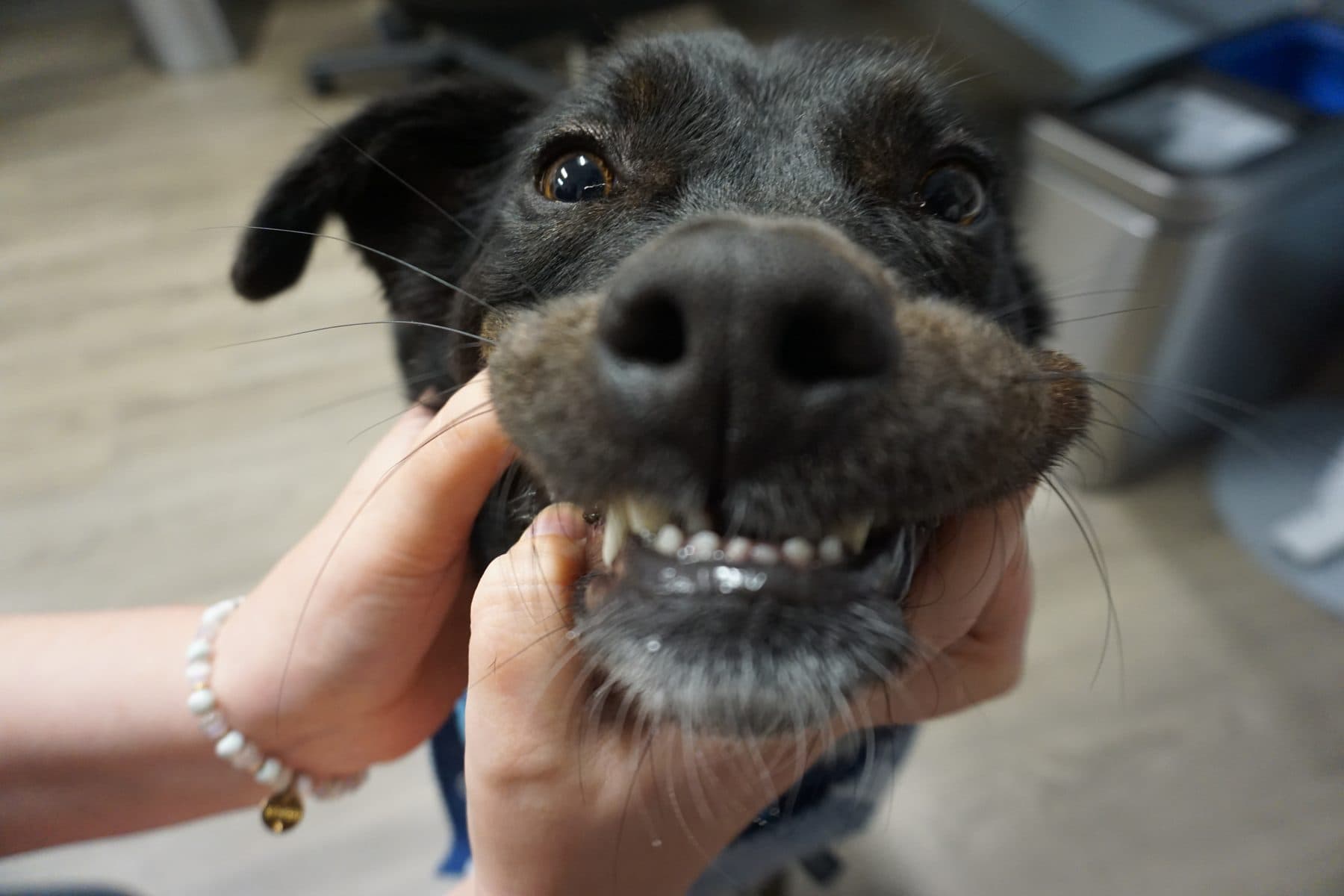
It hurts, but pets hide it well. They keep eating, because in the wild not eating is dangerous, so owners rarely see a pet stop. What we hear instead, after a dental, is that they're playing with toys again, or finally chewing on both sides.
Periodontal disease starts as plaque at the gumline and ends, untreated, with painful infection and lost teeth. The part that surprises most owners is how much of it is invisible: in one classic study, full-mouth X-rays found clinically important problems in teeth that looked completely normal on exam in 27.8% of dogs and 41.7% of cats. That's why a real dental means anesthesia, probing and X-rays, not just scraping the visible tartar. Treating it early is cheaper, less invasive and far kinder than treating it late.
- 80%
- of dogs have periodontal disease by age three
- 70%
- of cats, by the same age
- Most
- of the disease sits below the gumline, out of sight
Inside the visit
What's included
- A tooth-by-tooth exam and charting under anesthesia
- Probing every tooth for pockets, the way your dentist does
- Full-mouth digital dental X-rays
- Ultrasonic scaling above and below the gumline
- Polishing to smooth the enamel and slow plaque coming back
- Extractions when a tooth can't be saved, with the site closed and sutured
- Pain control before, during and after the procedure
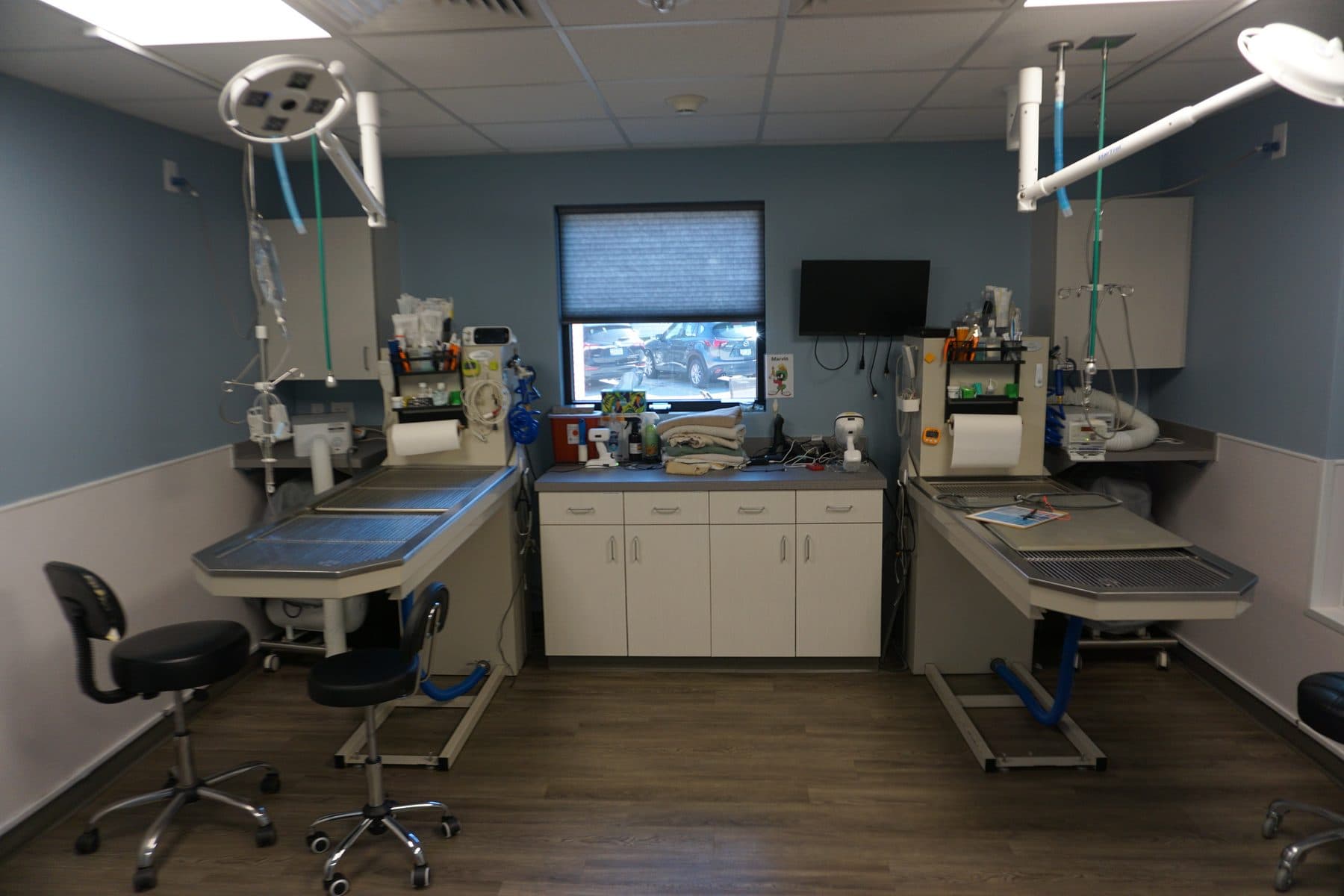
- Anesthetic monitoring by a trained technician the whole time
- A written home-care plan built around what your pet will actually tolerate
Signs of dental trouble to watch for
Most pets show one or two of these, not all of them. Any single one is worth an exam.
- Bad breath, the first sign owners usually notice
- Yellow or brown tartar, especially along the gumline
- Red, swollen or bleeding gums, or blood in the water bowl
- Drooling, pawing at the mouth, or face rubbing
- Chewing on one side, dropping food, or turning down hard treats
- A loose, broken or discoloured tooth
- Swelling under an eye, which can mean an abscessed tooth
- In cats: chattering the jaw when eating, or hiding more than usual
Your visit
What to expect
A dental here is a planned, monitored medical procedure, not a quick clean. Here's exactly how the day goes.
- 1
Oral exam and estimate
We look at your pet's mouth awake, grade what we can see, and talk through what they likely need. You get a written estimate before anything is scheduled, including the likely range if X-rays turn up extractions.
- 2
Pre-anesthetic bloodwork
Bloodwork and a physical exam check organ function and confirm your pet is a good anesthetic candidate. Age itself is not a disease, what matters is how the heart, liver and kidneys are doing.
- 3
Anesthesia, tailored and monitored
Your pet is given a protocol chosen for their age, breed and health, with a breathing tube protecting their airway. A technician stays with them and monitors heart rate, blood pressure, oxygen, temperature and breathing from start to finish.
- 4
Full-mouth X-rays and charting
We X-ray every tooth and probe each one, recording pockets, fractures, resorptive lesions and bone loss on a dental chart. This is where the hidden two-thirds of the tooth gets examined.
- 5
Cleaning, treatment and polishing
We scale above and below the gumline with ultrasonic and hand instruments, treat or extract problem teeth with local nerve blocks for comfort, then polish the enamel smooth.
- 6
Recovery and going home
Your pet wakes up warm and watched, with pain medication on board. You go home the same day with photos or X-rays of what we found, aftercare instructions, and a plan to keep the teeth we saved.
Good to know
Common questions
Why does a dental cleaning need anesthesia?+
Because the disease is under the gumline. Anesthesia is what lets us probe every tooth, take X-rays, clean below the gumline and treat pain, none of which is possible on an awake pet. It also protects the airway so nothing is inhaled while we work. Your pet is monitored the entire time.
What about anesthesia-free dental cleaning?+
We don't recommend it, and neither does the American Animal Hospital Association. Scaling the visible surfaces of an awake pet makes the teeth look whiter while leaving the disease under the gums untouched, and no diagnosis, X-ray or pain treatment is possible. It's a cosmetic procedure for a medical problem.
Is anesthesia safe for my older pet?+
For most seniors, yes. We run pre-anesthetic bloodwork, tailor the protocol to your pet, and monitor them closely throughout. Untreated dental infection is its own risk, and it's one your pet lives with every day. If bloodwork or the exam turns up a concern, we'll talk it through before scheduling.
How much does a dental cost?+
It depends on how much disease is under the gumline, which is why the exam and X-rays come first. A cleaning with no extractions is the low end; multiple extractions with X-rays and pain control is the high end. You get a written estimate before we start, and we call you during the procedure if what we find changes the plan.
How long does it take, and will my pet stay overnight?+
Most dentals are a drop-off in the morning and home the same afternoon. The procedure itself usually runs one to a few hours depending on what we find, plus recovery time.
Will my pet need teeth pulled?+
Only if a tooth can't be saved, and we'll always tell you what we found and why. Pets do remarkably well after extractions, most eat normally within a few days, and they're far more comfortable without a painful, infected tooth. Many owners say their pet acts years younger afterward.
How often does my pet need a dental?+
It varies by pet. Small breeds and cats tend to need them more often, large breeds less. AAHA recommends a first anesthetized dental assessment by age one for cats and small dogs, and by age two for larger breeds, then on the schedule their mouth calls for. We'll grade your pet's teeth at every exam and tell you where they stand.
How do I care for my pet's teeth at home?+
Daily brushing with pet-safe toothpaste is the gold standard, and starting slowly matters more than brushing perfectly. If brushing isn't realistic, look for the Veterinary Oral Health Council seal on chews, diets and water additives, those are the products with real evidence behind them. Ask us and we'll pick something your pet will accept.
My pet is still eating, so their teeth must be fine, right?+
Unfortunately not. Pets almost never stop eating because of dental pain, they adapt by swallowing food whole or chewing on the other side. A dental exam, not appetite, is how you know.
Keep exploring