

Our services
Avian & Exotic Care
- Birds
- Exotics
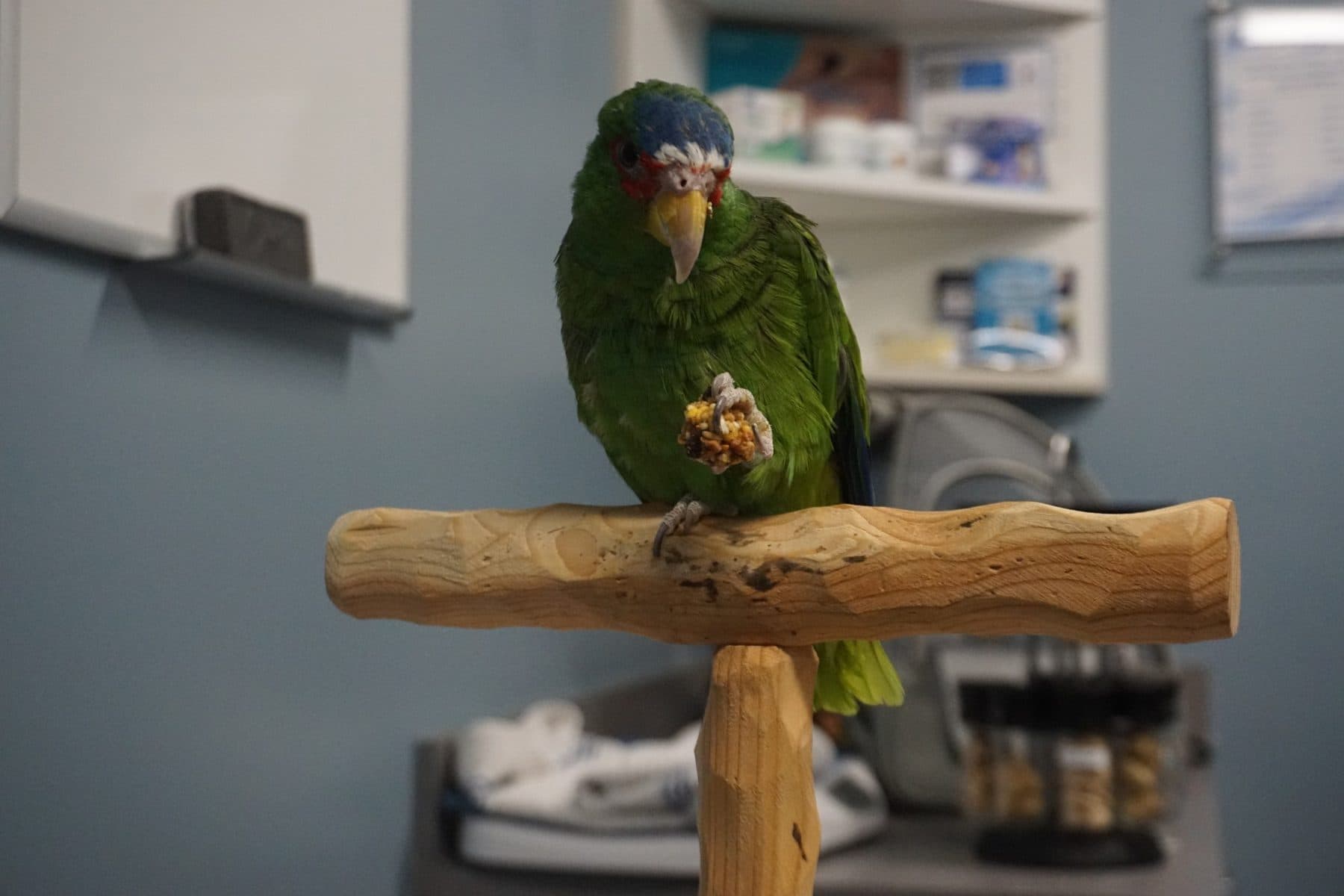
One of the metro's few clinics that treats birds, rabbits, and pocket pets, not just cats and dogs.
- Birds, rabbits and pocket pets
- On-site bloodwork and X-ray
- Diet and habitat guidance for your species
What it is
The clinic that says yes to birds and exotics
Birds, rabbits and pocket pets are prey species. Every instinct they have says to look healthy, because in the wild an animal that looks unwell is the one that gets taken. That instinct does not switch off in a living room. By the time a bird sits fluffed on the floor of the cage or a rabbit stops eating, the illness has usually been building for weeks.
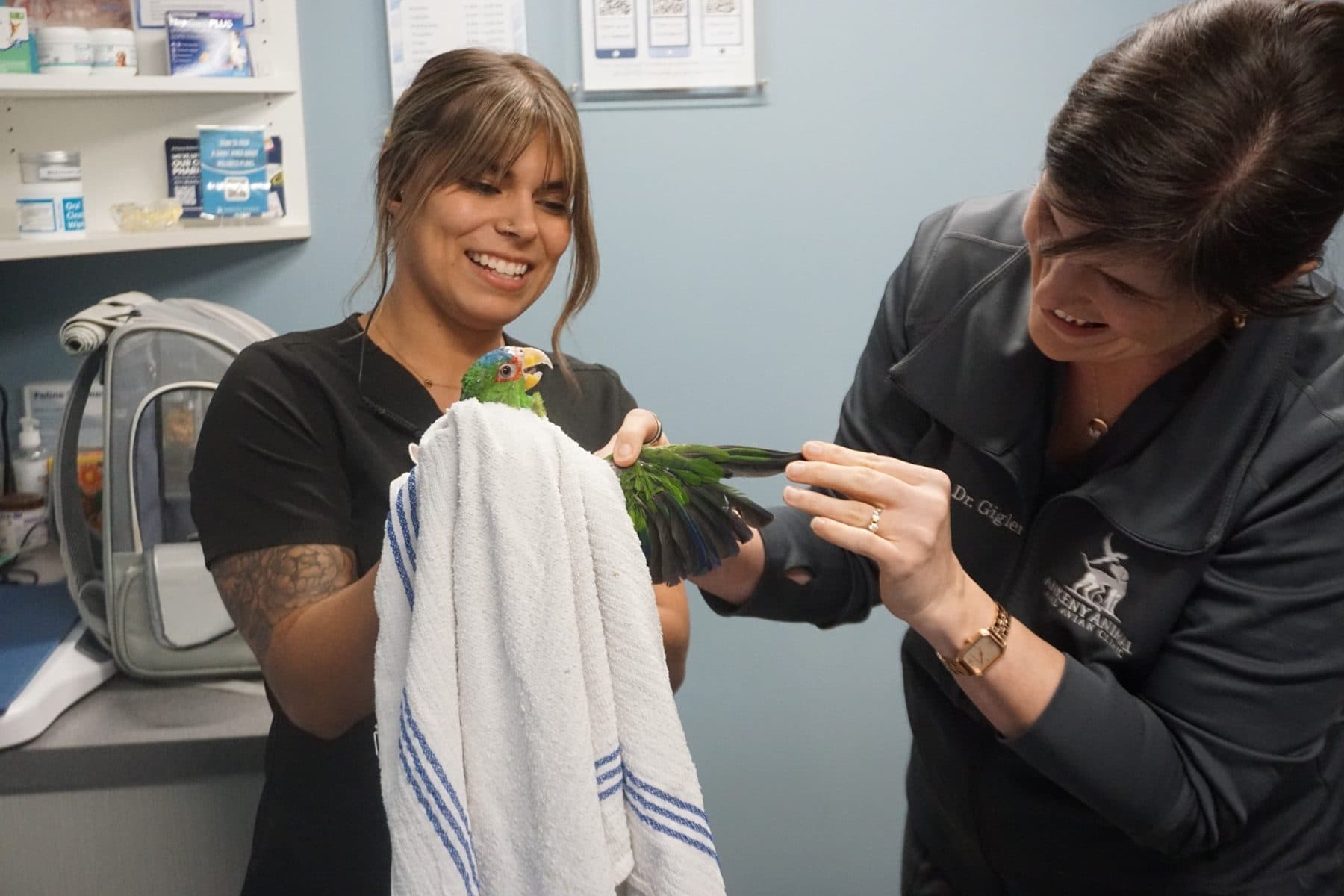
Two things make exotic medicine different. The first is masking: because prey species suppress outward signs of illness for as long as they physically can, birds and small mammals routinely arrive at a clinic already decompensating, in a worse state than a dog or cat with the same disease would be. The window between the first visible sign and a genuine emergency can be hours, not weeks. The second is husbandry. A huge share of what we treat in exotics is not bad luck, it is the enclosure: rabbits and guinea pigs whose continuously growing teeth overgrow on a low-fiber diet, guinea pigs short on vitamin C because they cannot make their own, birds on a seed-only diet. Those are all preventable, and they are found by someone who knows to ask about the lamp, the substrate and the food bowl.
We are one of the few clinics in the Des Moines metro that sees birds, rabbits and pocket pets, and we have been doing it from the same locally owned practice since 1963. Whether you have an African grey, a cockatiel, a rabbit or a guinea pig, the goal is the same: find the problem while it is still small, and fix the husbandry that caused it.
- 13%
- of US households now own a specialty or exotic pet, and the number keeps rising
- 2.8%
- own a bird, yet very few of those birds ever see a veterinarian
- Most
- illness we see in exotic pets traces back to diet, lighting or habitat
Inside the visit
What's included
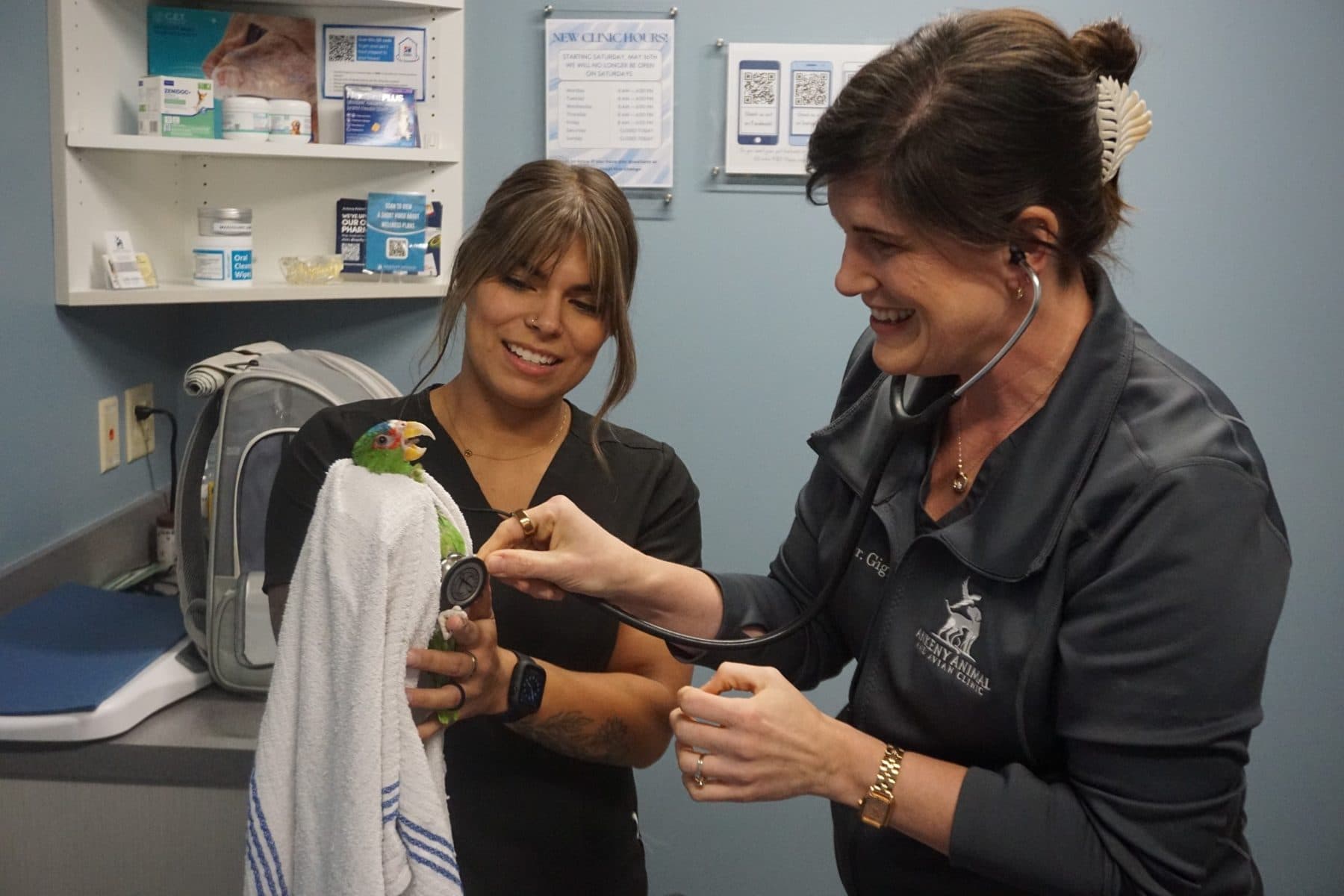
- Avian wellness exams, sick visits, and grooming (nail, wing, beak)
- Rabbit, guinea pig, ferret and pocket pet medicine
- Diet, habitat and heating guidance specific to your species
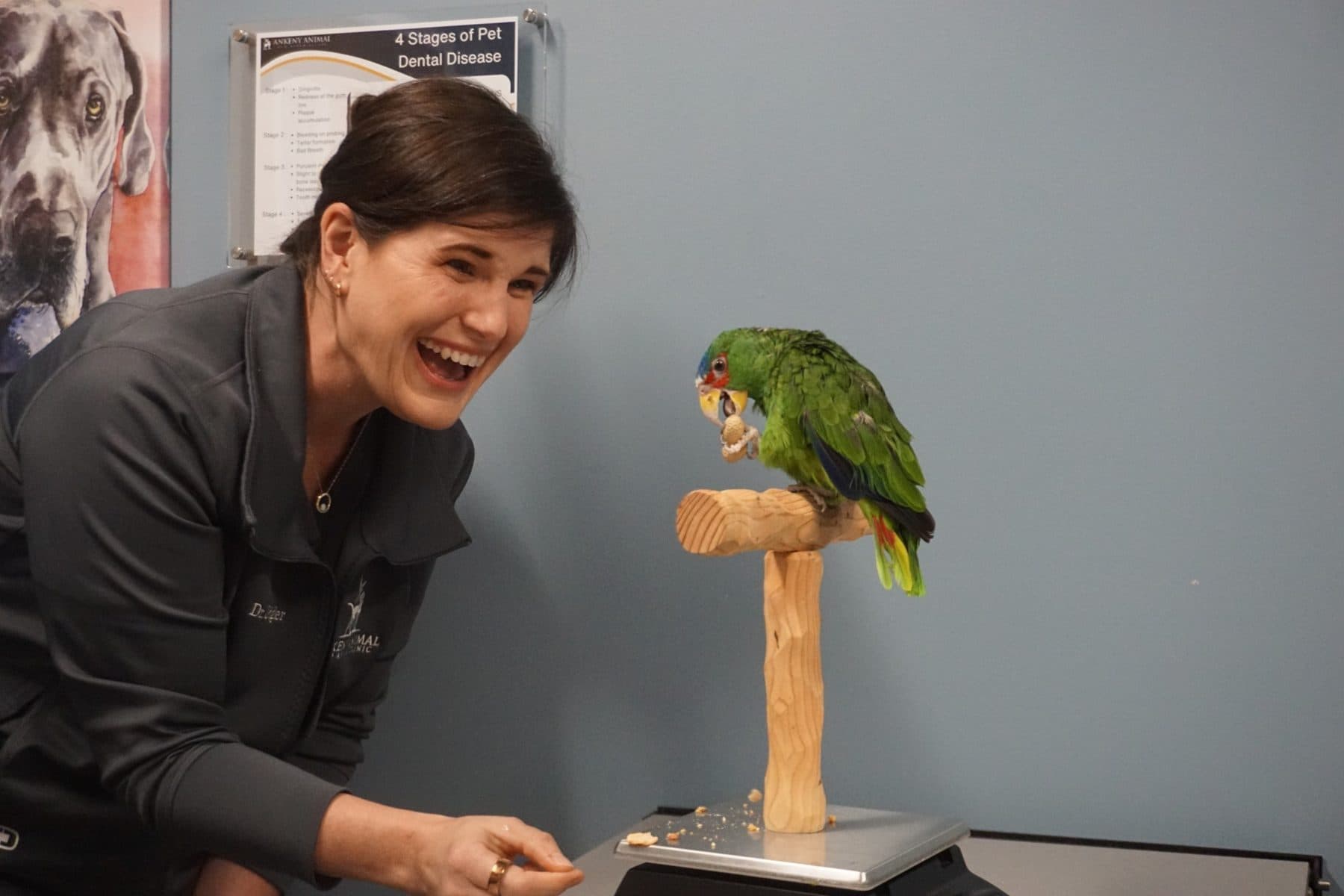
- Accurate weights in grams and body condition tracking over time
- On-site bloodwork and fecal testing, so results do not wait on an outside lab
- On-site X-ray, which spares a fragile patient a second trip
- Same-day sick and urgent exotic appointments when we can fit them
- Written go-home plans, because husbandry changes are hard to remember
Signs your bird or exotic needs to be seen
Prey species hide illness until they cannot. By the time you see one of these, it is not early. Call us the same day.
- A bird sitting fluffed, quiet, or on the floor of the cage
- Tail bobbing, open-mouth breathing, or any change in breathing
- Changes in droppings: color, amount, consistency, or none at all
- A rabbit or guinea pig who has not eaten or passed stool for 12 hours, which is an emergency
- Weight loss, a hunched posture, or sitting with feathers or fur ruffled
- Drooling, wet chin, or dropping food, which usually means overgrown teeth
- Any sudden change in behavior, noise, or activity, including a bird that stops talking or singing
Your visit
What to expect
Quiet, unhurried, and heavy on questions about home, because home is usually where the answer is. Here is how a visit goes.
- 1
Booking and what to bring
Bring your pet in a secure, appropriately sized carrier, kept warm and covered, which matters a great deal in an Iowa winter. Photos or a short video of the enclosure, the exact food and supplements you use are worth more than almost anything else you can bring.
- 2
A quiet check-in
We keep noise, dogs and bright activity away from birds and small mammals wherever we can, because stress alone can tip an already sick exotic over the edge.
- 3
The history, which is the real diagnostic test
Diet down to the brand, enclosure size and material, temperature range, humidity, lighting and bulb age, substrate, cage mates, droppings, and what has changed recently. This part is long on purpose. In exotic medicine the history often points at the diagnosis before we lay a hand on the animal.
- 4
A gentle, species-appropriate exam
Minimal restraint, held only as long as needed. An accurate weight in grams, because a few grams is a lot on a cockatiel. Then feathers or scales, skin, beak or teeth, eyes, ears, body condition, heart and lungs, abdomen or coelom, and vent.
- 5
Diagnostics, if they will change the plan
Bloodwork, fecal testing, cultures, and X-rays are all available here, which matters for an animal that does not travel well. We recommend tests that will actually change what we do next, and explain what each one is for before running it.
- 6
A husbandry plan you can act on
You leave with treatment if it is needed and, just as importantly, specific changes to make at home: this pellet instead of that seed mix, this bulb replaced on this schedule, this basking temperature, this much hay. Written down, because nobody remembers it in the parking lot.
Good to know
Common questions
What birds and exotic pets do you see?+
Birds, rabbits, guinea pigs, ferrets, rats, hamsters, gerbils and most other pocket pets. We do not see reptiles or amphibians. If you are not sure whether your pet is on the list, call us. Even if we are not the right fit for a particular species, we would rather tell you than have you go without.
My bird looks completely fine. Why does it need an exam?+
Because looking fine is what birds do. They are hard-wired to suppress outward signs of illness, which is why so many arrive at a vet already seriously ill. A wellness exam catches what you cannot see at home: a weight that has quietly dropped, early signs of a deficiency, a heart murmur, liver changes from a seed-based diet. It is also the visit where we fix the husbandry problems that cause most exotic illness, before they cause it.
How much does an exotic exam cost?+
An exotic wellness exam is priced in the same range as other office visits, and testing is on top of that if your pet needs it. Exotic appointments are often longer than a dog or cat appointment because the history is so much of the work. You will get the cost of any recommended tests before we run them. Call us for current pricing.
How often should my bird or exotic be seen?+
A wellness exam once a year for most, and twice a year for geriatric pets, birds on a poor diet, or any pet with an ongoing condition. It is also worth a visit within the first week or two of bringing a new bird or small pet home, before a problem from the store or breeder becomes your problem.
How should I transport my bird or small pet?+
A secure, appropriately sized carrier, not a cage that lets them thrash. Keep them warm and cover the carrier so they are not watching the world go by. In Iowa winters, warm the car first, and never leave a bird or small pet in a parked car in any season. Do not clean the cage the morning of the visit, because the droppings are useful to us.
Do you trim nails, wings and beaks?+
Yes, and this is a common reason for a first visit. Nail trims, wing trims and beak work are all routine here. A beak that is genuinely overgrown is usually a medical sign rather than a grooming issue, so we would want to look for the reason rather than just trim it.
Should I get my bird's wings clipped?+
It depends on the bird, the household and what you want your bird's life to look like, and it is a real discussion rather than a default. A clip reduces some risks, like flying into a window or a stove, and creates others, including hard landings and the behavioral cost of taking away flight. If you do want it done, a proper trim by someone who knows the species matters a lot. We will talk it through rather than decide for you.
My rabbit stopped eating. Can it wait until tomorrow?+
No. A rabbit or guinea pig that has not eaten or passed stool for 12 hours needs to be seen, because gut motility can shut down within hours and becomes life-threatening quickly. It is also frequently a symptom rather than the disease: chronic dental problems are one of the most common underlying causes of repeated gut stasis. Call us, and if we are closed, call an emergency hospital that sees exotics.
Do you see reptiles?+
No. We see birds and small mammals, but not reptiles or amphibians. If you have a lizard, snake, turtle or frog that needs care, call us and we will point you toward a clinic in the metro that does.